Multi-Partner Solution — Embedded creation | Developer Documentation
Multi-Partner Solution — Embedded creation
Updated: Dec 12, 2025
Multi-Partner Solutions (MPS) allow Solution Partners and Tech Providers to jointly manage customer WhatsApp assets in order to provide WhatsApp messaging services to customers.
If you are a Solution Partner, instead of using the app dashboard to create an MPS, you can create one using a snippet of JavaScript and an HTML button which you can embed somewhere on your website. Tech Providers who want to partner with you can use the button to grant your app permission to manage solutions for one or more of their apps, which you can then do using a series of API requests.
Flow
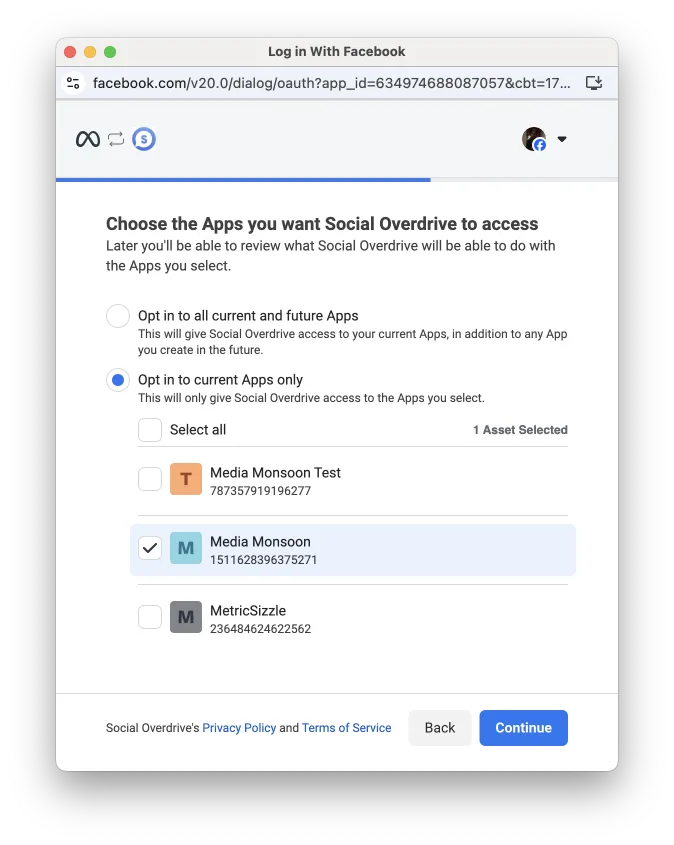
Tech Providers who visit your website and click the embedded solution creation button will be asked to authenticate, and after doing so, will be presented with an interface that allows them to choose an existing app:

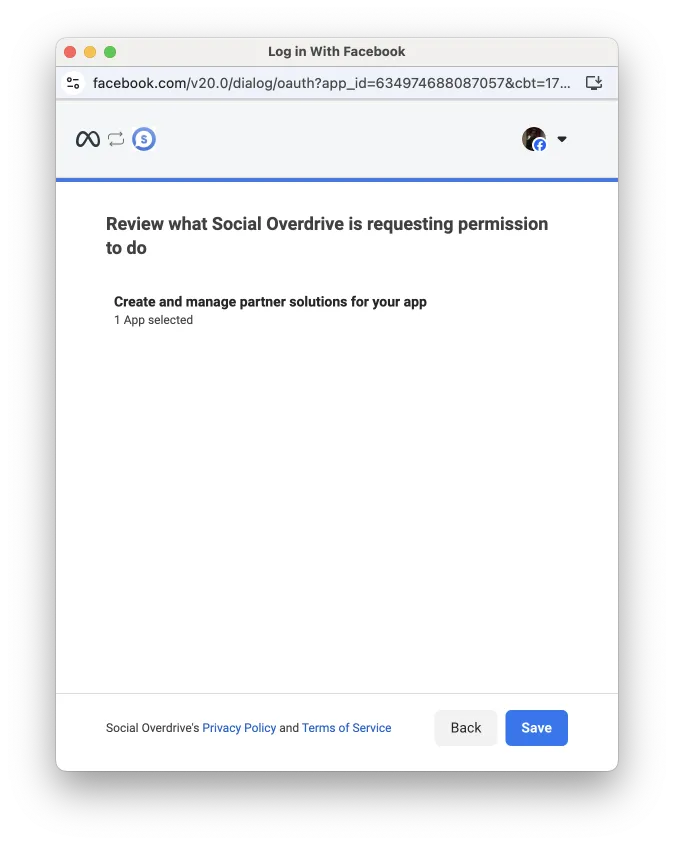
After choosing an app, they can review and confirm that they will be granting your app permission to manage their app’s Multi-Partner Solutions.


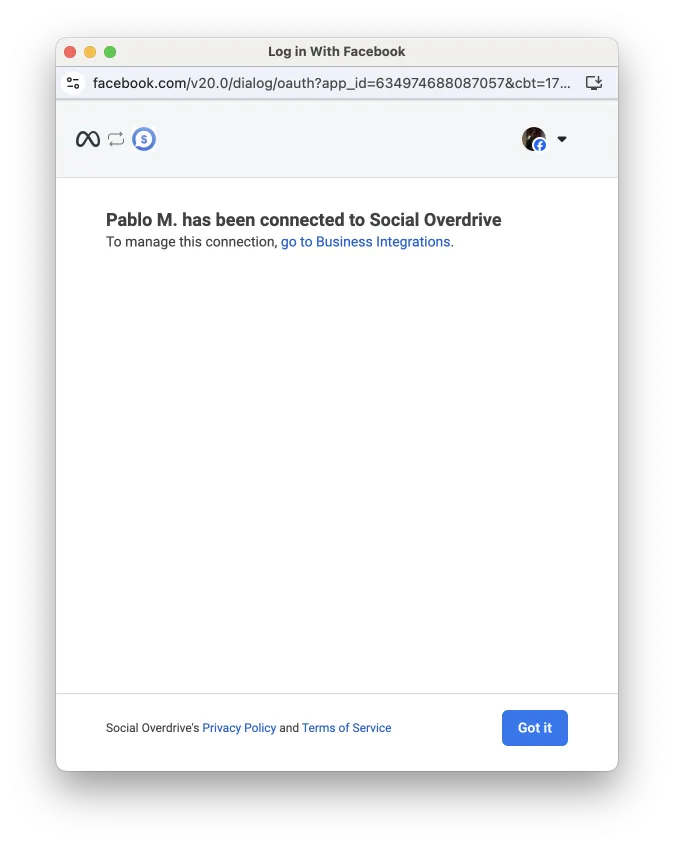
Once the Tech Provider dismisses the interface, a user access token will be generated and returned to flow, where you can capture it. You can then use the token in a series of API calls to get Tech Provider’s chosen app ID(s) and create and accept a solution.
Requirements
Embedded creation button
Step 1: Grant permission to app
Access the Meta Business Suite and use your system user to grant your app the manage_app_solution permission.
Use this token when accepting any Multi-Partner Solutions you create for your partners (see below).
Step 2: Add embedded button code
Add the following code to your website or portal, or wherever you plan on directing Tech Providers who will be working with you as part of an MPS. Be sure to replace
<SOLUTION_PARTNER_APP_ID> with your app ID.<!-- Load JavaScript SDK asynchronously --><scriptasyncdefercrossorigin="anonymous"src="https://connect.facebook.net/en_US/sdk.js"></script><script>// Configure JavaScript SDK
window.fbAsyncInit =function(){
FB.init({
appId:"<SOLUTION_PARTNER_APP_ID>",// Replace with your app ID
cookie:true,
xfbml:true,
version:"v20.0"});};// Launch MPS creation flowfunction launchSolutionCreationFlow(){
FB.login(function(response){if(response.authResponse){const accessToken = response.authResponse.accessToken;
console.log(accessToken);// Replace with your code that captures access token}else{
console.log("User failed to authorize");// Replace with your code that logs auth failure}},{
scope:"manage_app_solution"});}</script><buttononclick="launchSolutionCreationFlow()"style="background-color:#1877f2; border: 0; border-radius: 4px; color: #fff; cursor: pointer; font-family: Helvetica, Arial, sans-serif; font-size: 16px; font-weight: bold; height: 40px; padding: 0 24px;">Launch Solution Creation</button>Direct prospective Tech Provider partners to this location and instruct them to complete the flow. Let them know that completing the flow does not create the solution (it requires some API calls on your part) and that you’ll provide them with the solution ID once it has been created.
Solution creation
Step 1: Capture user token
Anytime a Tech Provider uses the embedded solution creation button and completes the flow, the flow returns an
authResponse object (response.authResponse) that has an accessToken property:{
status: 'connected',
authResponse: {
accessToken: '<USER_ACCESS_TOKEN>',
expiresIn:'<TOKEN_EXPIRATION_TIMESTAMP>',
reauthorize_required_in:'<SECONDS_UNTIL_REAUTH_REQUIRED>',
signedRequest:'<SIGNED_PARAMETER>',
userID:'<USER_ID>'
}
}Capture the
accessToken property value. This is the Tech Provider’s user access token, which you will need next.Step 2: Get app details
Use the Tech Provider’s user access token and the GET /me/assigned_applications endpoint to get a list of app IDs that the Tech Provider selected when they completed the flow.
Example request
curl 'https://graph.facebook.com/v20.0/me/application_details' \ -H 'Authorization: Bearer EAAJB'
Example response
Example response of a Tech Provider who selected a single app in the flow.
{
"data": [
{
"link": "www.mediamonsoon.com",
"name": "media_monsoon_prod",
"id": "634974688087057"
}
]
}Each object in the response describes an app the Tech Provider selected when completing the flow. Capture the
id property value of each app for the next step.Step 3: Create a solution for Tech Provider
Use the Tech Provider’s access token and an app ID from the previous step to make a request to the POST /<APP_ID>/whatsapp_business_solution endpoint.
Repeat this request for each app ID returned in the previous step.
Request Syntax
POST /<APP_ID>/whatsapp_business_solution{
"owner_permissions": ["MESSAGING"],
"partner_app_id": "<SOLUTION_PARTNER_APP_ID>",
"partner_permissions": ["MESSAGING"],
"solution_name": "<SOLUTION_NAME>"
}<SOLUTION_PARTNER_APP_ID> — Your app ID.<SOLUTION_NAME> — Name to give the solution. This name will appear in the App Dashboard for both you and the Tech Provider, so the name should be unique and distinguishable from other solutions you or the Tech Provider may later initiate or accept.Response
Upon success, the API will create a solution and associate your app and the Tech Provider’s app to it.
{
"solution_id": "<SOLUTION_ID>"
}Capture the
solution_id value. This is the solution ID, which you will need in the next step.Step 4: Accept the solution
Use your system user access token from the Grant Permission to App step and the solution ID to make a request to the POST /<SOLUTION_ID>/accept endpoint for any solutions you have created for Tech Providers.
Example request
curl -X POST 'https://graph.facebook.com/v20.0/795033096057724/accept' \ -H 'Authorization: Bearer EAAAT...
Example response
Upon success:
{
"success": true
}Once you have accepted the solution, inform the Tech Partner that the solution has been created successfully, and provide them with any solution IDs you have created and accepted.
No comments to display