WhatsApp for Kommo.com \ AmoCRM.com
- WhatsApp Business API for Kommo: Installation and sending the first message.
- Disable link shortening in Kommo.com
- How to make independent salesbots for several WhatsApp numbers on one Kommo account \ AmoCRM.com
- Distribution of chats from different numbers among managers in Salesbot
- Sending template messages using Salesbot
- How to create a template for WhatsApp Business API
- How to improve your mailling
WhatsApp Business API for Kommo: Installation and sending the first message.
Step by step instruction
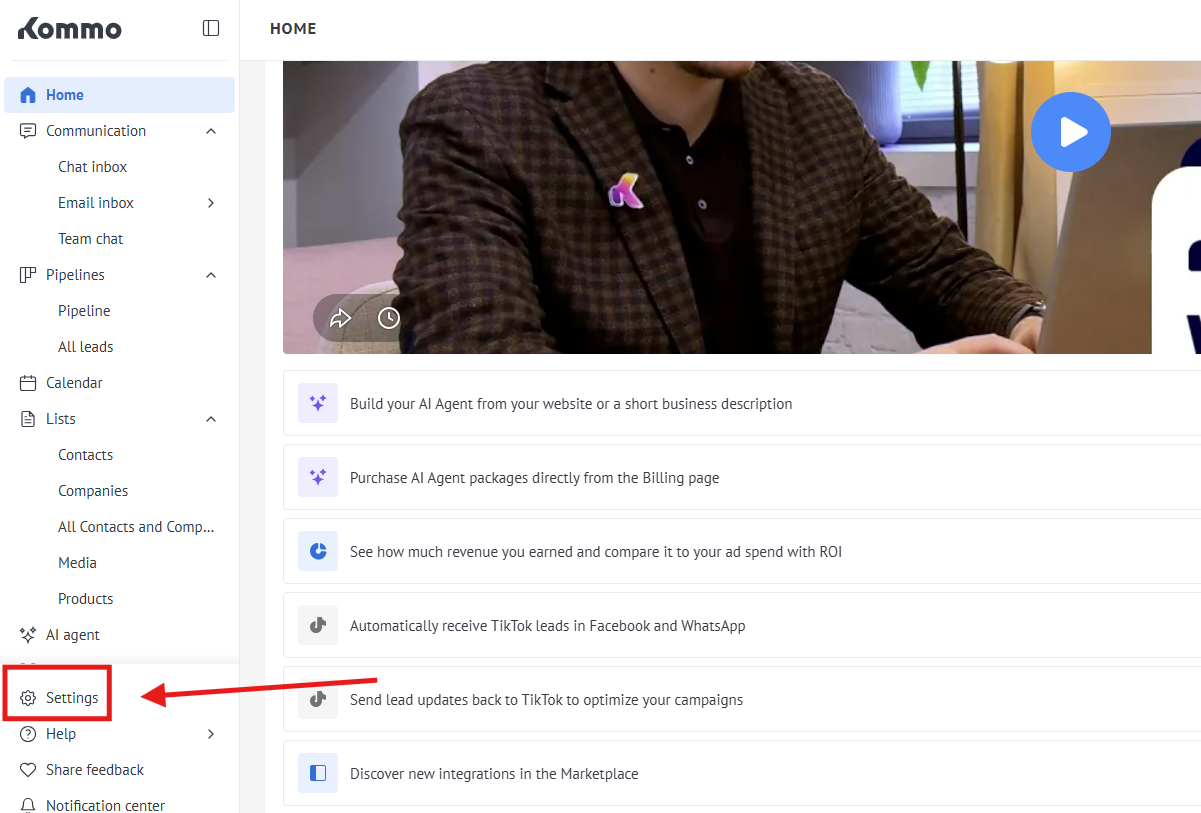
1. First of all, go to the "Settings"
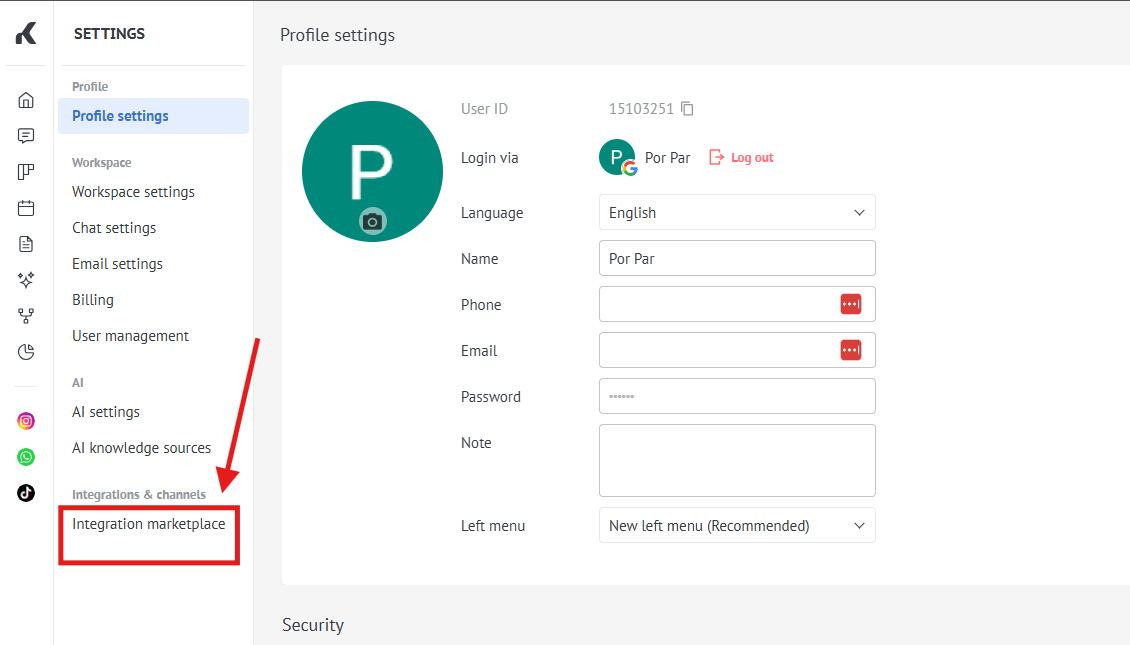
2. Go to the "Integration marketplace"
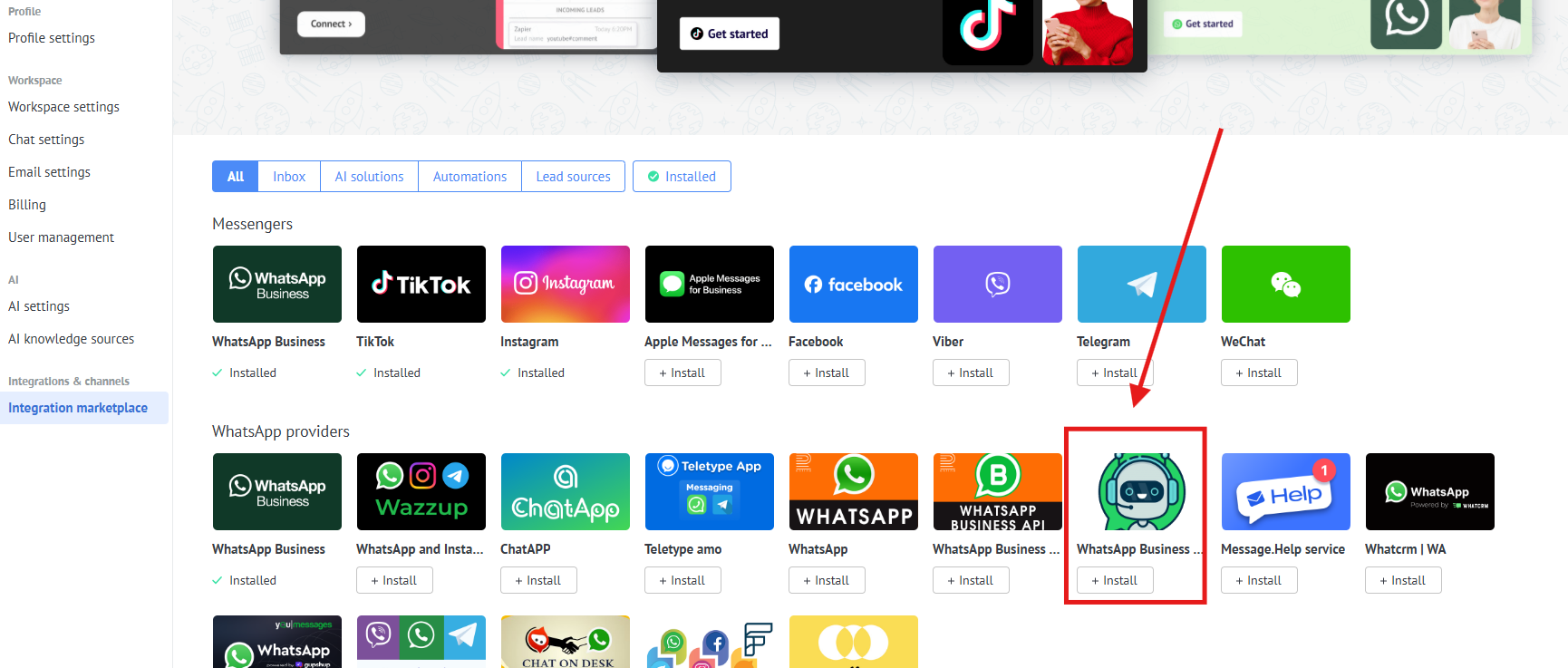
3. Choose our app WhatsApp Business API ( check a screenshot )
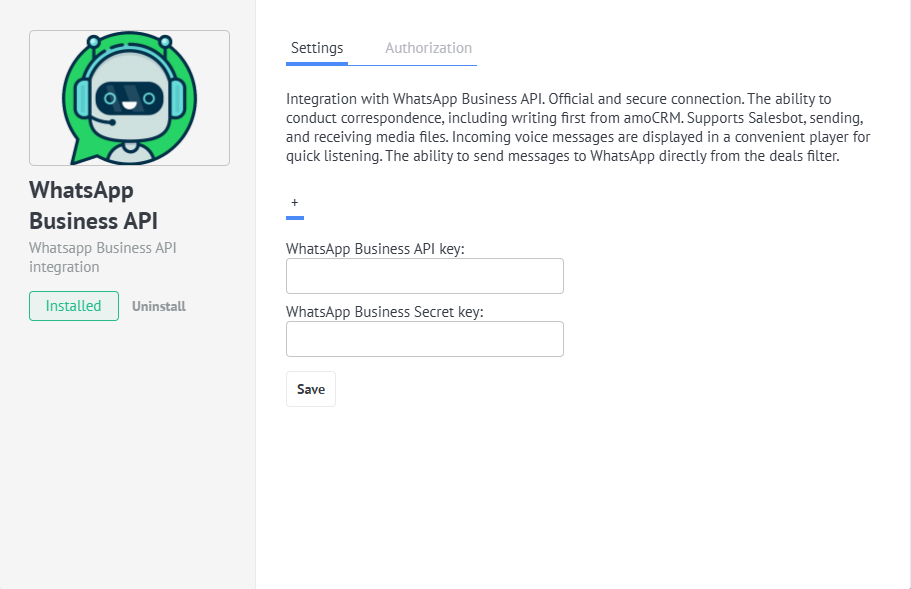
4. Fill in your APP ID and APP SECRET
5. Send your first message from your personal WhatsApp to your WhatsApp Business API number
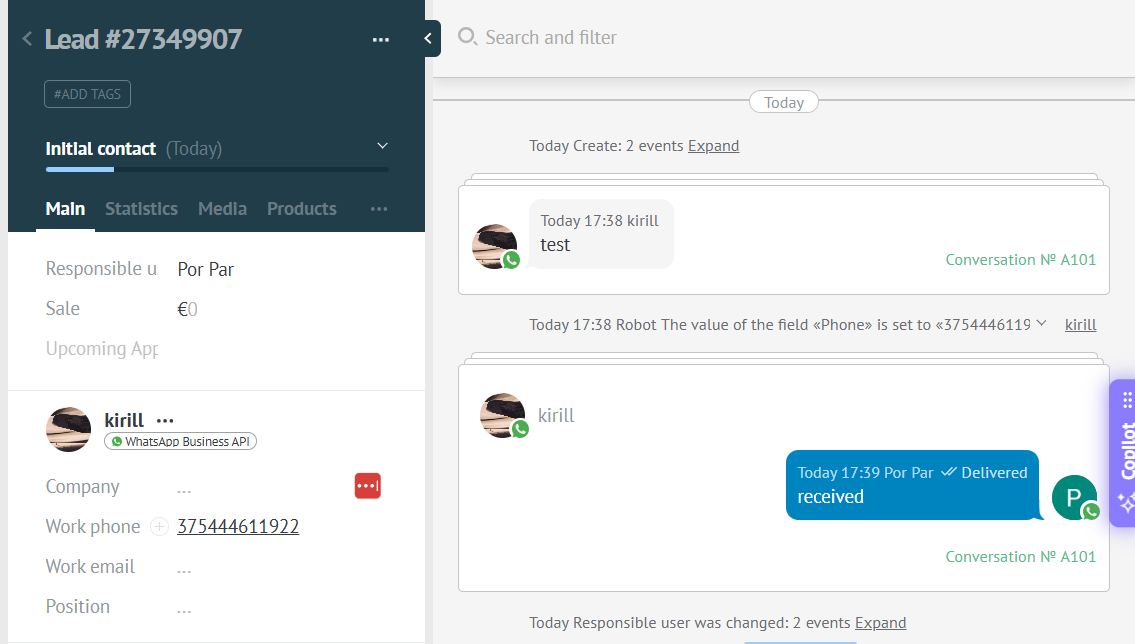
Sending a message using templates
Video manual : https://www.youtube.com/watch?v=2S6VyKS0Rpg
You can send templates from chats in Kommo by using the list of templates
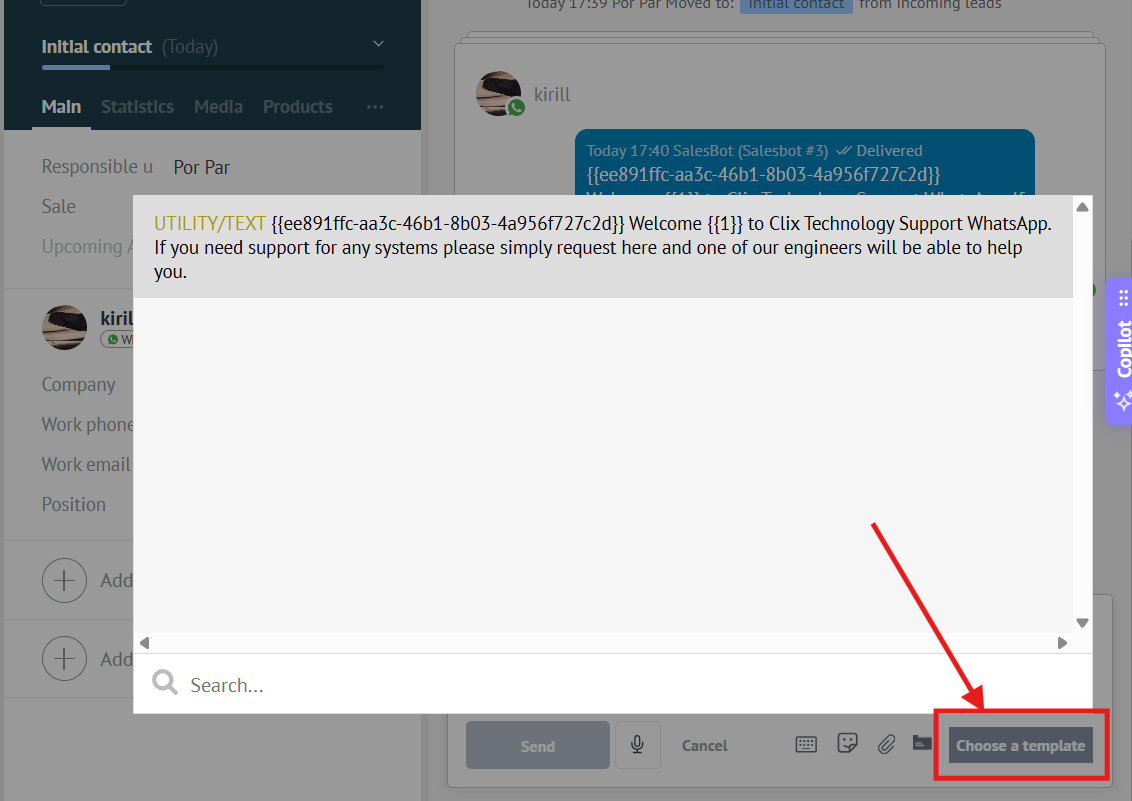
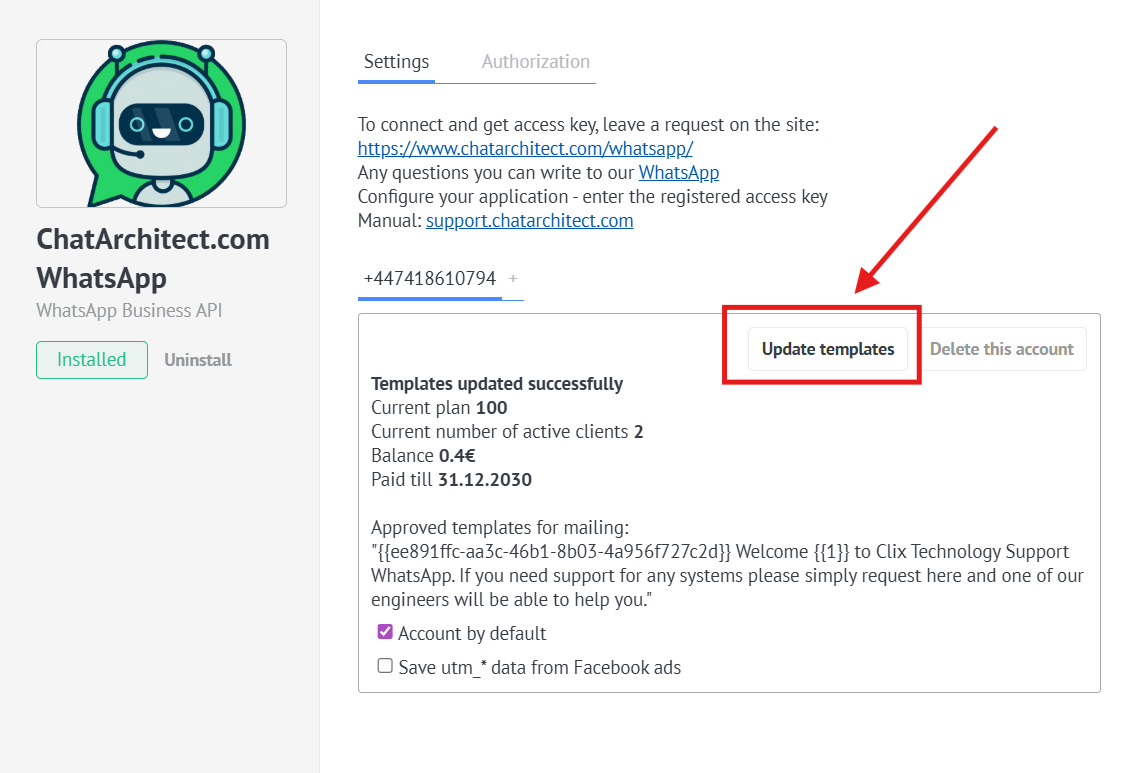
❗❗❗ In case the templates do not appear in the list, you need to:
Go to the "Settings" -> "Installed" -> Click on our application -> Press "Update templates" button
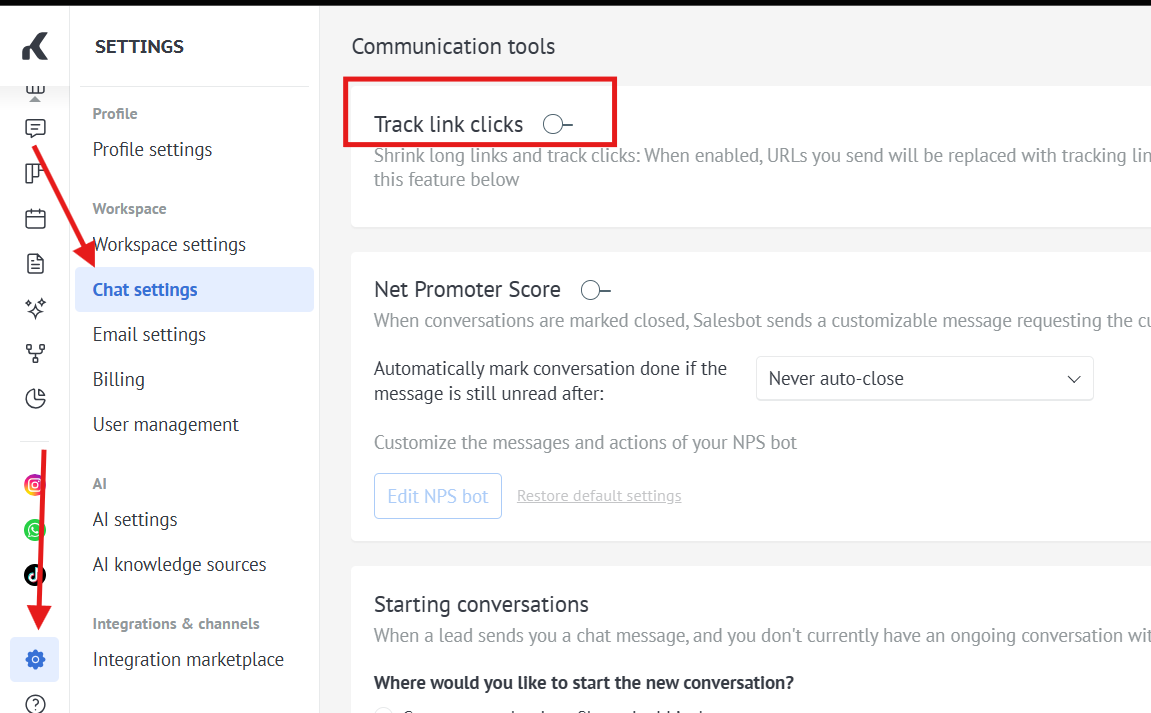
Disable link shortening in Kommo.com
For templates to work correctly (if they contain a link), you need to disable the built-in link shortening in Kommo.
Go to the "Settings" -> "Chat settings" -> Turn off the "Track link clicks" toggle.
How to make independent salesbots for several WhatsApp numbers on one Kommo account \ AmoCRM.com
As a result of following all points of this instruction:
- See live examples of creating bots in Kommo / AmoCRM.com
- Learn to make independent salesbots for several WhatsApp numbers on one account.
Step by step instruction
1. Adding a new number for the second site/department to your app.chatarchitect.com and kommo.com accounts
1.1 Add a second number to your app.chatarchitect.com account. To do this, press the button (1). Fill in App ID and APP SECRET

1.2 Add a second number to your kommo.com account. To do this, go to the Settings (2) -> Integrations (3) section and click on the ChatArchitect application icon (4)

1.3 To add a new number, press the "+" button (5). In the window that appears, enter the API key and Secret Key of your second phone

2. Approve template messages (which will be sent to all customers when interacting with WhatsApp chats of company sites/departments) on app.chatarchitect.com. In the screenshot, an example of the first template for the first number, the second template is added in the same way for the second number.

3. Set up a personal SalesBot for each number separately.
3.1 To configure SalesBot, go to Settings (1) -> Communication tools (2) -> Click on the word "Create" (3)

3.2 In the window that appears, you can select the template "Set up actions based on the words in a client's message" (which means that the bot will read the chat and respond to the keywords that the client writes ("Message received" trigger)) OR you can configure the bot without a template on the "Any new conversation" trigger (which means that the bot will send a standard template ONLY during the FIRST contact of a client with your company via WhatsApp chat).
In this example, we will choose the template "Set up actions based on the words in a client's message" (4).

3.3 Set up the SalesBot script for the first phone as follows and click the "Save" button:

3.4 Now click on the trigger "Message received" (5)

3.5 In the pop-up window, in the "For all leads with" field, select "Source" -> Your first phone number and click the "Done" button

3.6 We do steps 3.1-3.5 for the second bot that will listen to the second number. But of course, in step 3.5, select your second number, and in step 3.3, specify the texts for the second Salesbot.
As a result, we will get the following:

Distribution of chats from different numbers among managers in Salesbot
Video manual: https://www.youtube.com/watch?v=uS8U-27okmQ
This article will be useful if you have multiple numbers and each number is assigned to a separate manager. In this article, you will learn how to quickly set up the distribution of chats from different numbers among managers in Salesbot.
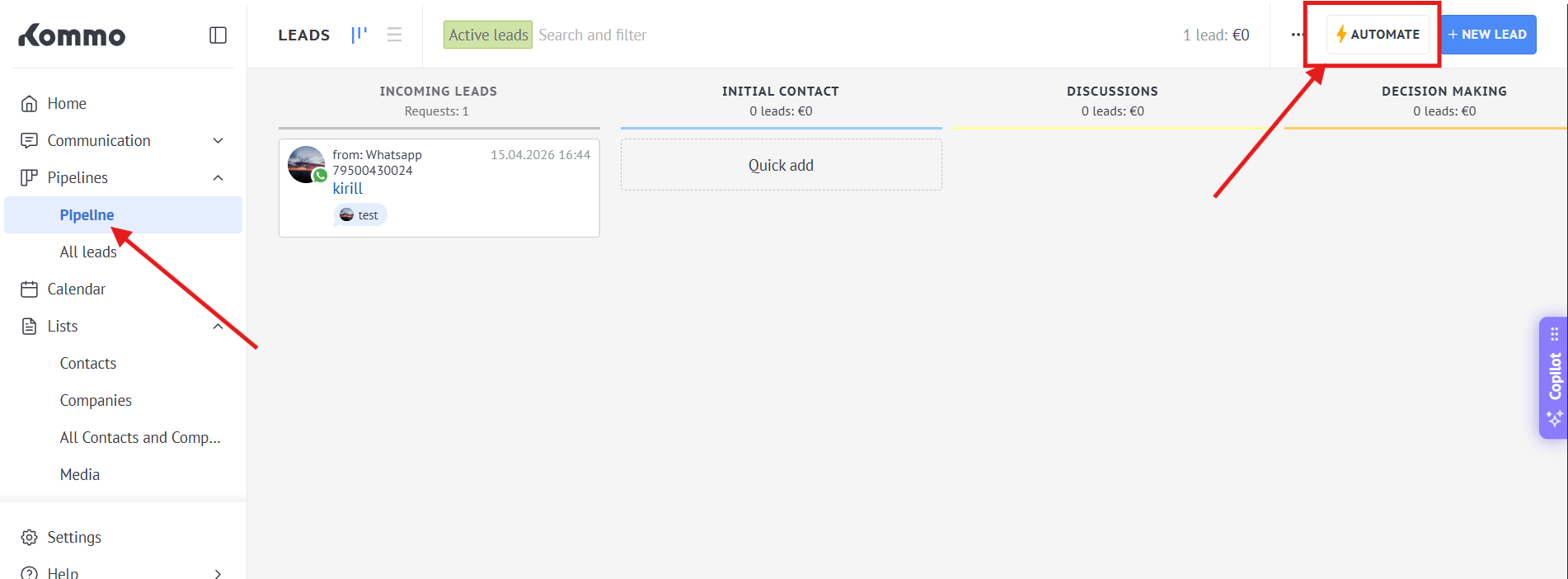
1. Go to the Pipeline - > Automate
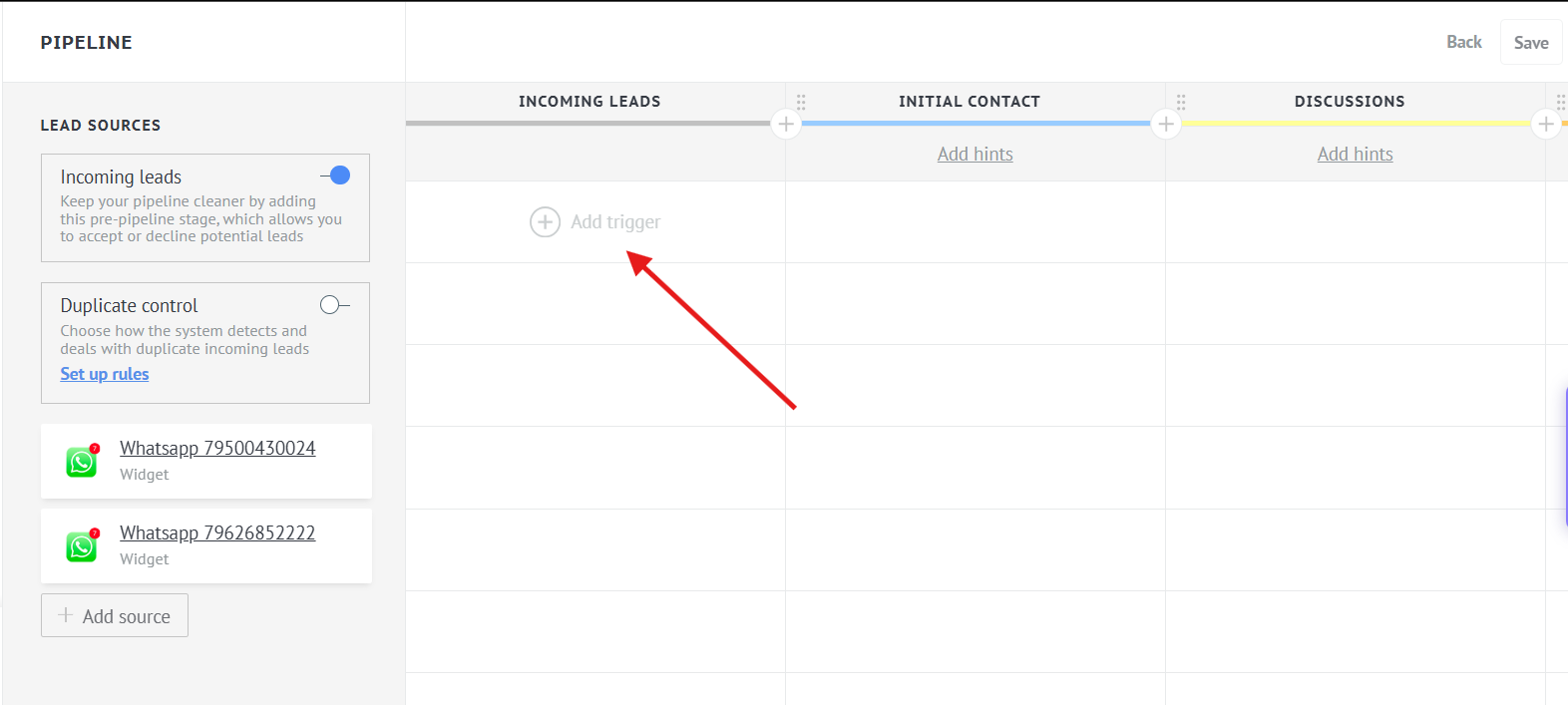
2. Press "Incoming leads" - > "Add trigger"
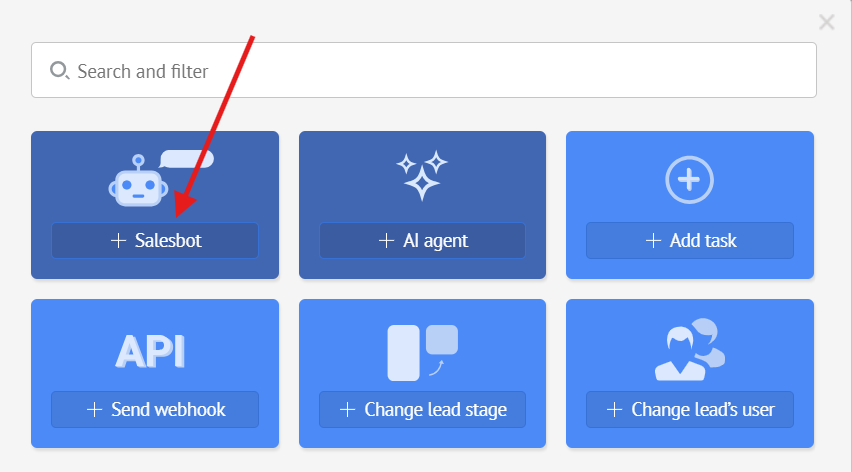
3. Select "Salesbot"
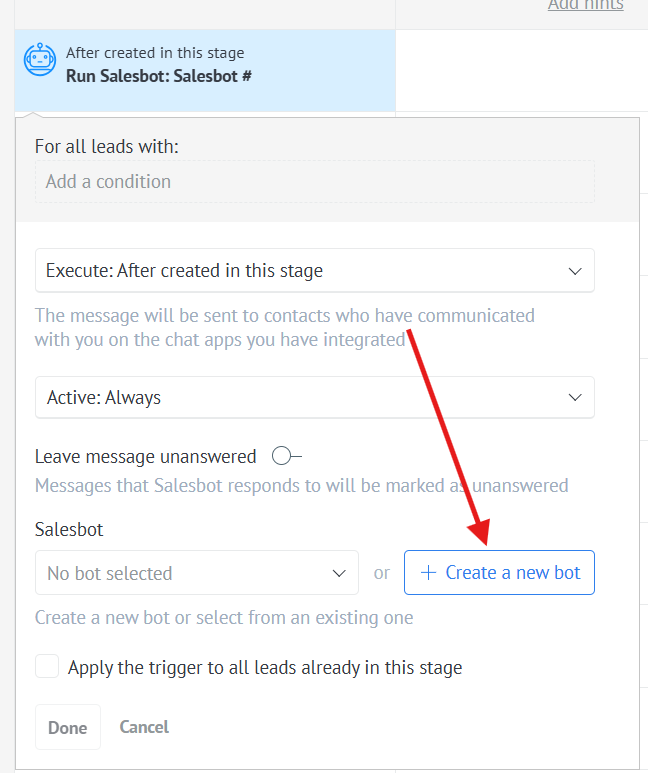
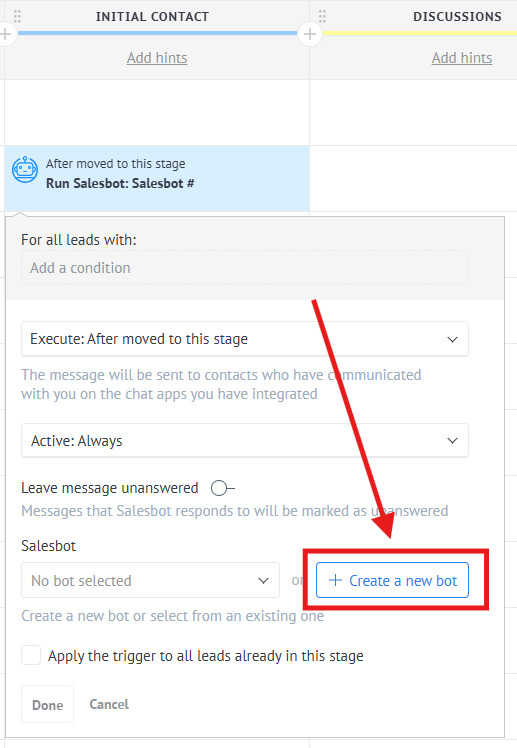
4. Choose "Create a new bot"
5. Press "Start from scratch" button
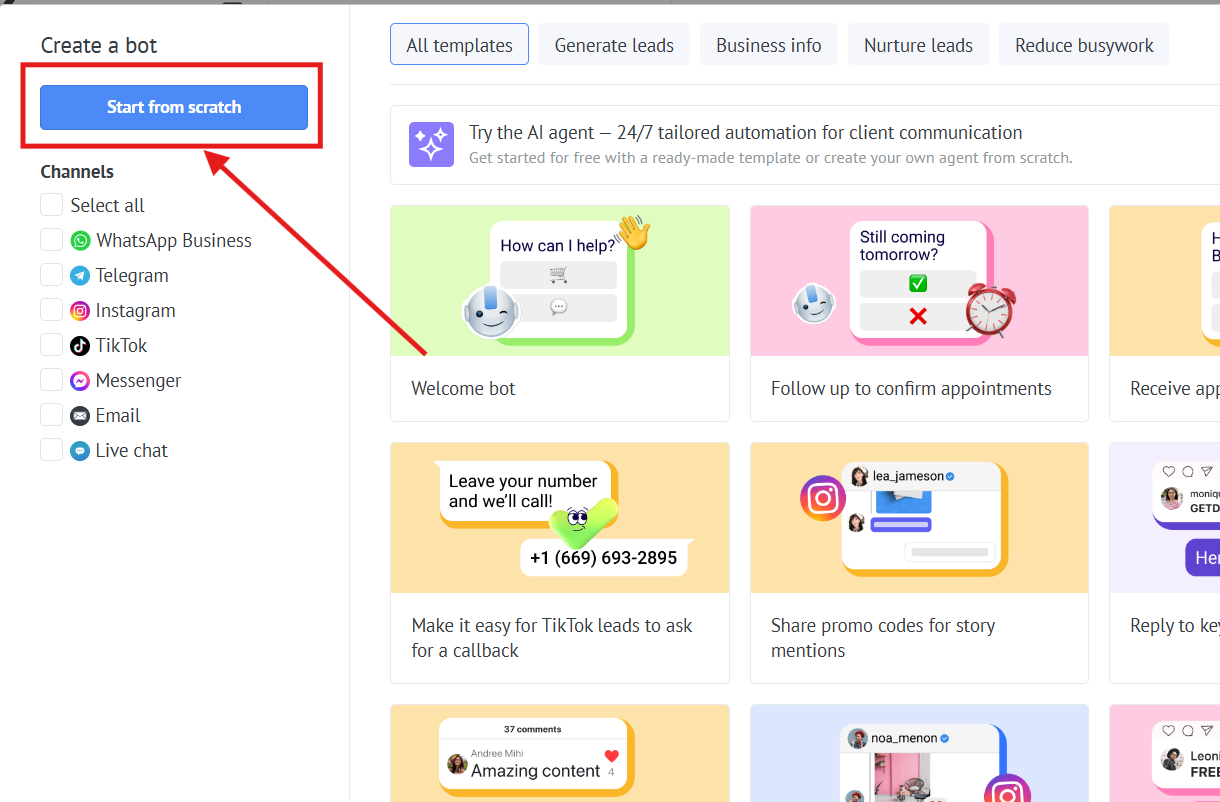
6. Choose "Condition"
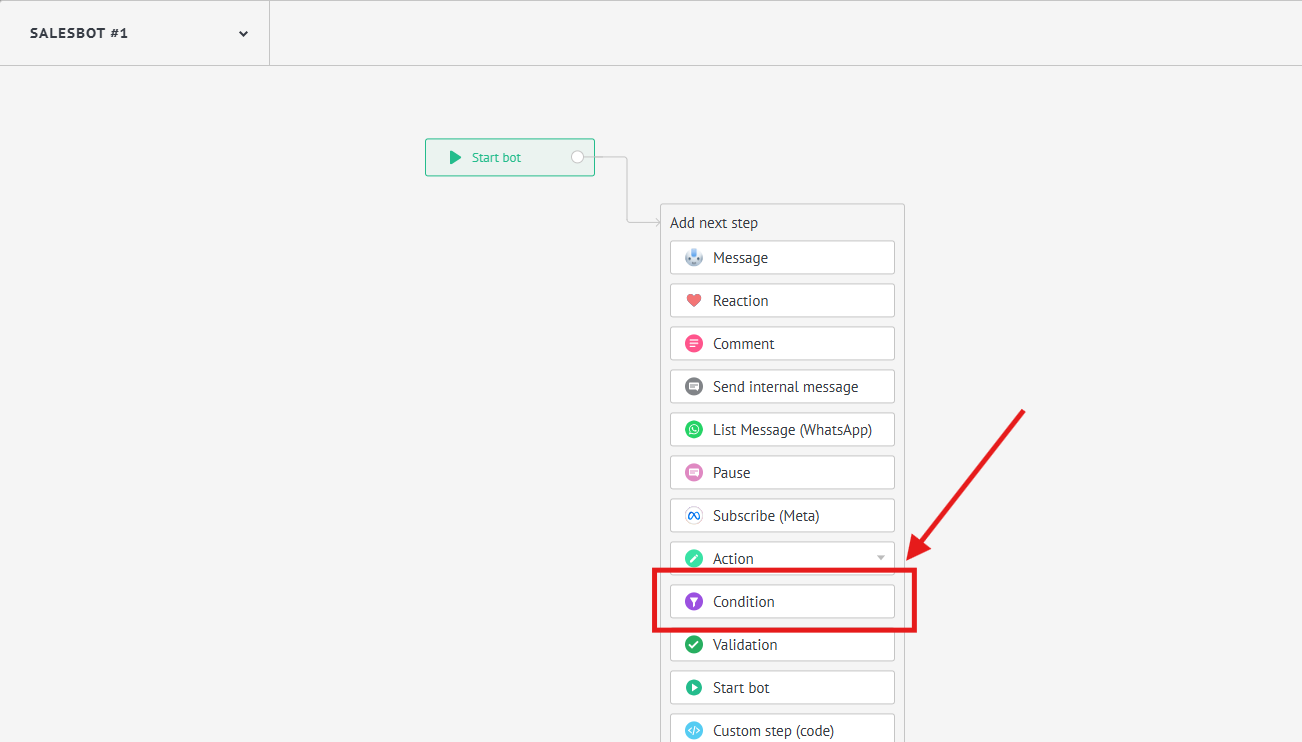
7. Add 2 conditions "If leads source Equals: and select a separate number for each condition"
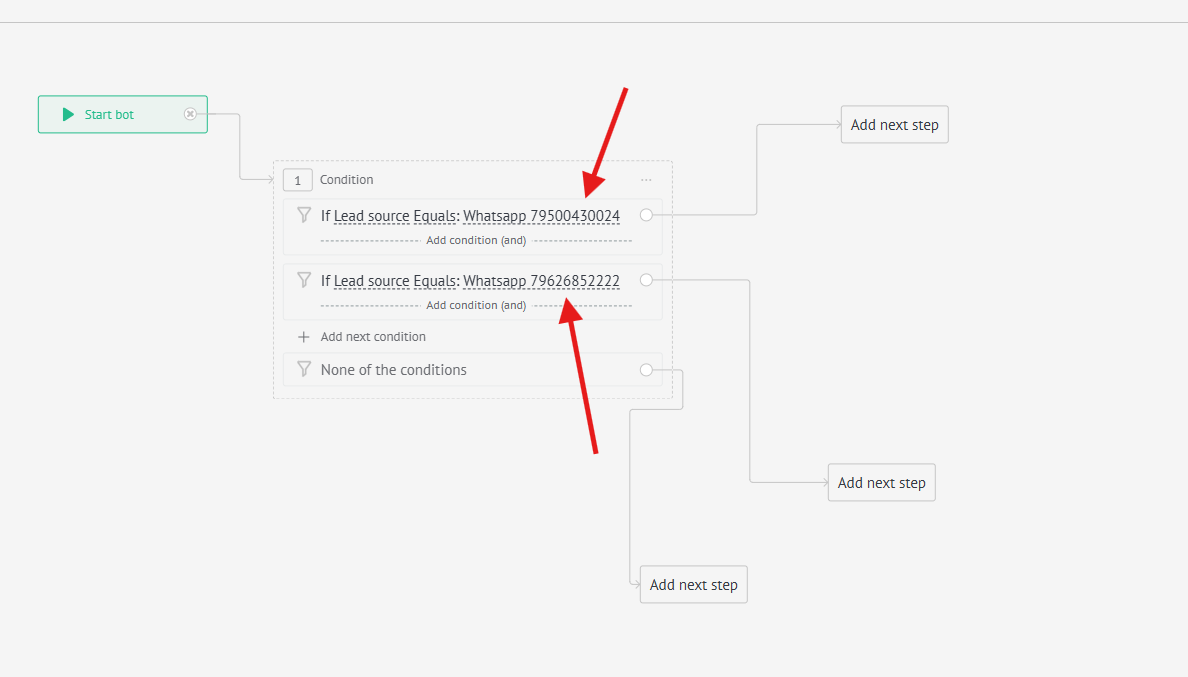
8. Press "Add next step" and choose "Action" -> "Change responsible User"
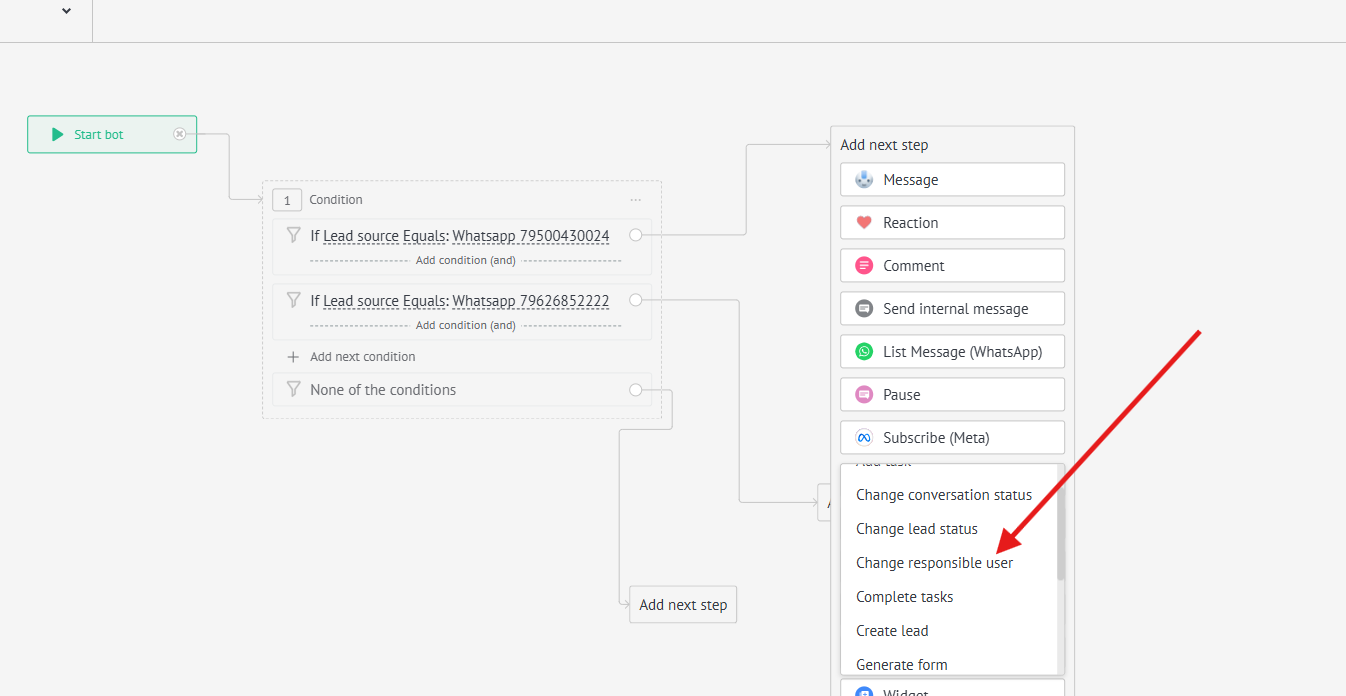
9. Select the appropriate managers for each number
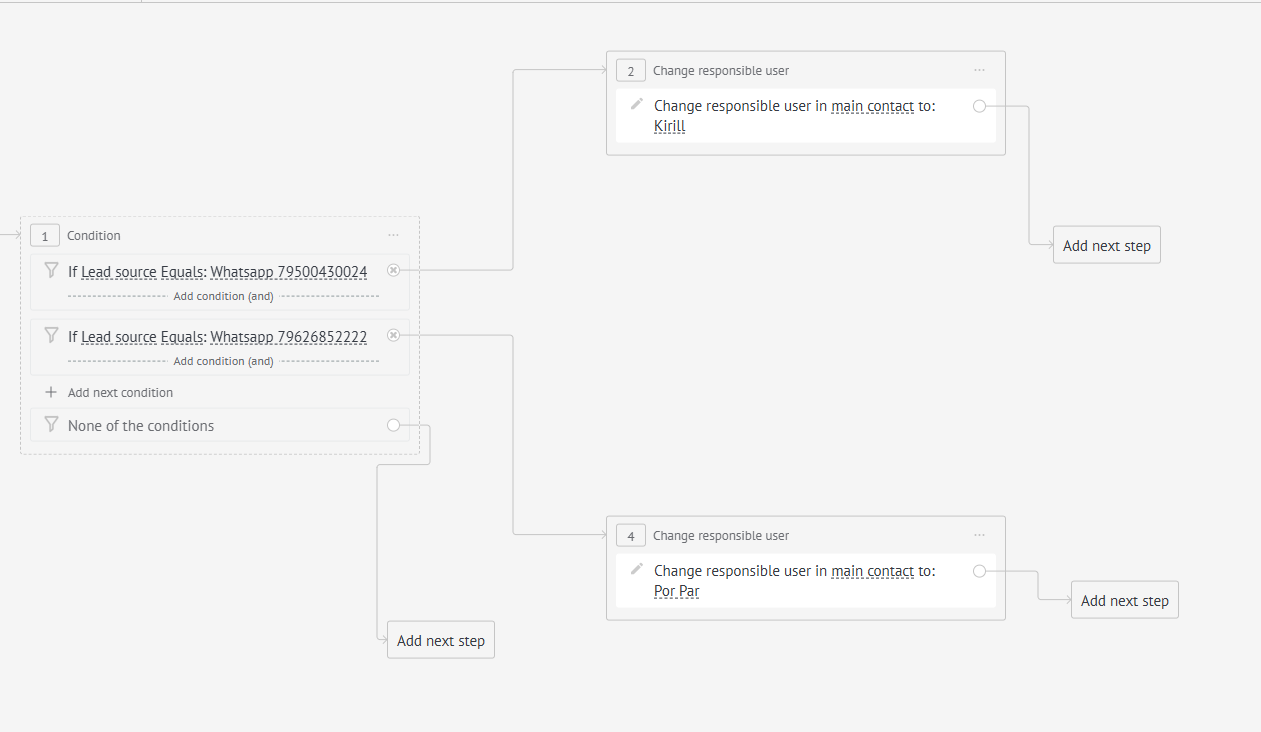
Done. Now the conversations will be distributed among managers based on this setup.
Sending template messages using Salesbot
In this guide, we will show you how to send template messages using Salesbot.
1. First of all, you need to go to the "Pipeline" and choose a stage, where do you want to use your Salesbot
In my case, this is the "Initial contact" stage.
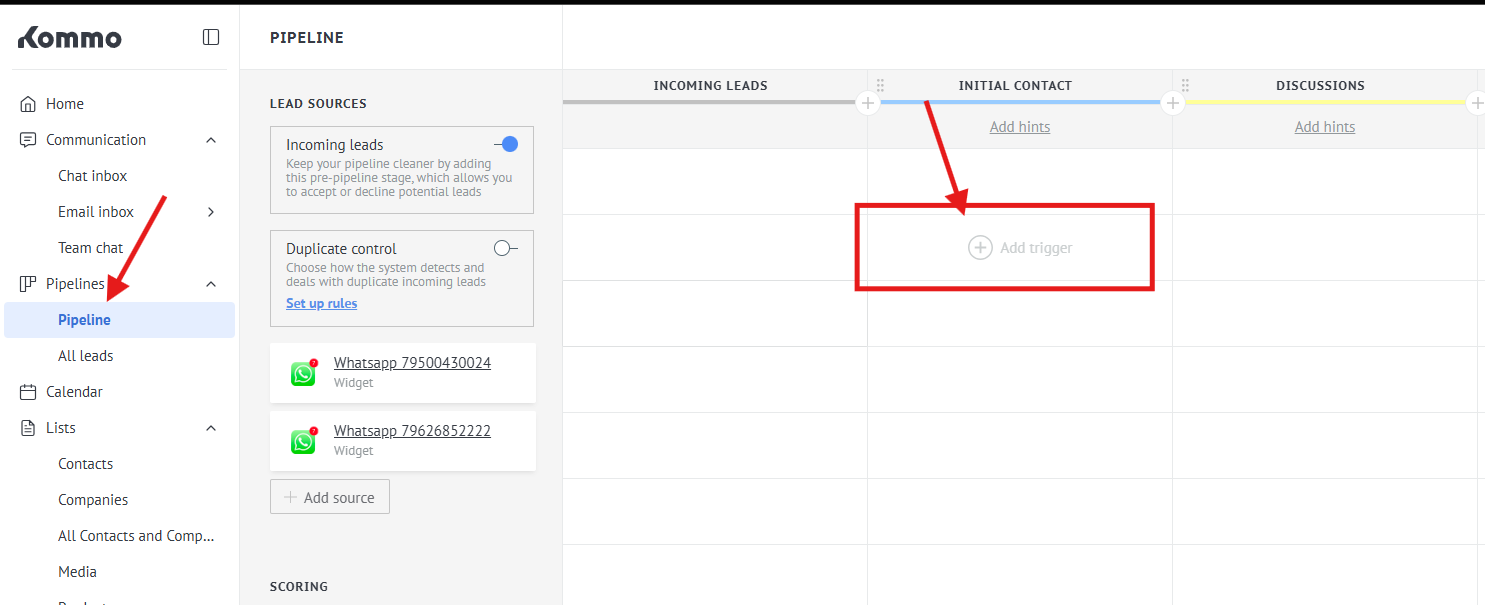
2. Press "Add trigger" -> "Salesbot" -> "Create a new bot"
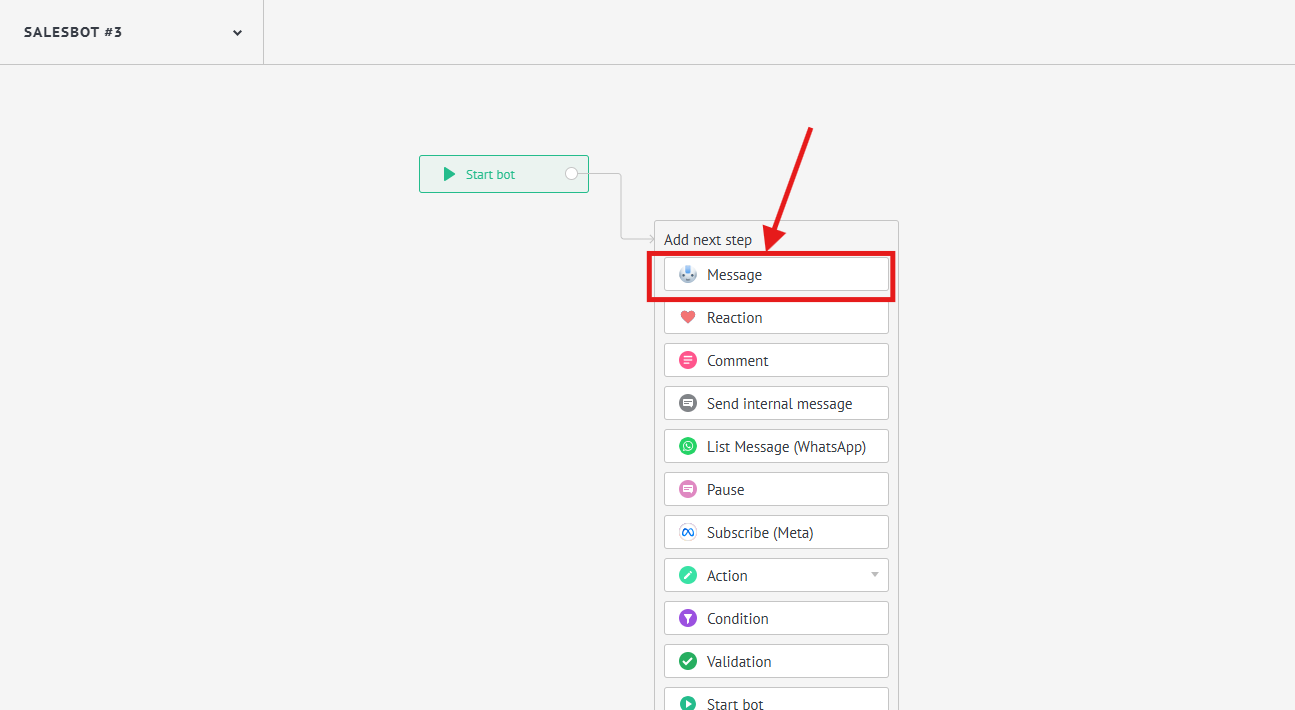
3. Choose "Message" step
4. After that, select the template you want to use for sending.
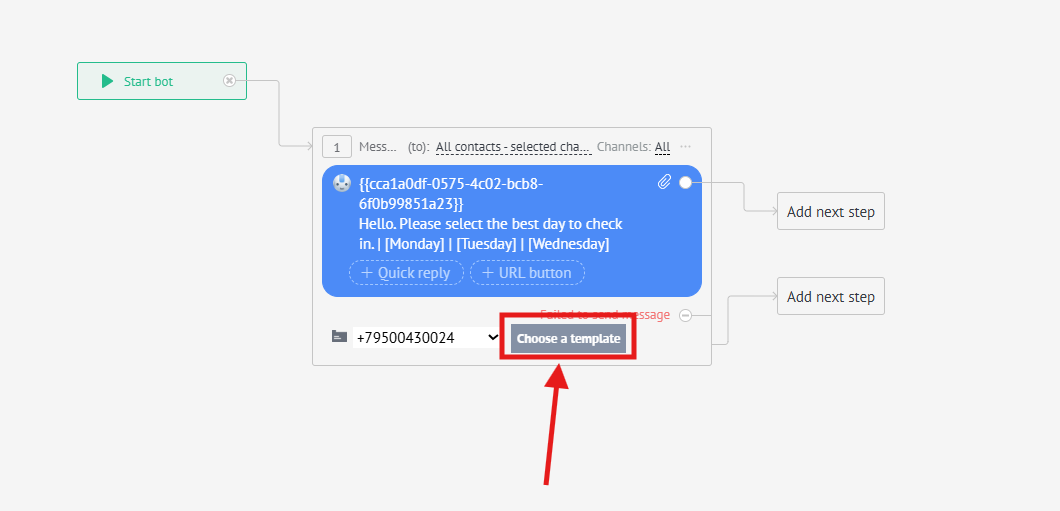
Done. Now all your deals that move to the "Initial contact" stage will receive the template you selected.
Note: At the moment, adding files of the following formats is available: .png, .jfif, .pjpeg, .jpeg, .pjp, .jpg, .bmp, .dib, .webp, .m4v, .mp4 - the bot supports all video formats that can be chosen to send
How to create a template for WhatsApp Business API
Step-by-step instructions how to create a template in our app
1. First of all, you need to open wtargeted.com/ and click on the "Facebook Login" button or "Google Login" button

2. After you have logged in to your google \ facebook account, you must enter your PERSONAL phone number on which there is a WhatsApp application, a verification code will be sent to it (not to be confused with the number that you connected with us)

3. Put your App key and Secret and press "Yes, continue".

4. After this, an app menu will be opened. Click on the "Submit template" button.

5. Select the desired language and template type.
Write your message with variables in the first column. For example, "Hello, our employee will answer you as soon as possible. Ticket {{1}} has been created." Variables should be in braces {{}}.
Write a sample message replacing the variables with meaningful information in the second column. For example, "Hello, our employee will answer you as soon as possible. Ticket [999TTT] has been created.". The placeholder is square brackets [].
Then click "Submit Template".

6. After review, your template will appear in "Approved templates".

Don't forget to click on the "refresh" button.
How to improve your mailling
How to improve your Template
When preparing a mailing campaign, one of the most common questions is: How can I create an effective newsletter without risking being blocked? In this article, we’ll share practical recommendations to help you achieve that.

Text Length
Meta recommends keeping marketing templates under 500 characters to maximize customer engagement. The optimal range is 300–500 characters. In practice, this means keeping your message concise and focused: present the essence of your offer in just a few sentences instead of overwhelming readers with a wall of text.
Personalization with Variables
Personalization significantly improves the effectiveness of your campaigns. Using variables such as the customer’s name is a simple but powerful way to make your messages feel more personal. After all, everyone appreciates being addressed directly.
Use of Media
Adding visuals such as bright images or short videos is a proven way to increase click-through rates. High-quality media design not only attracts attention but also serves as an important driver of conversions.
Action Buttons

In addition, action buttons can redirect users directly to your website or phone number, making the communication process seamless and convenient.

Unsubscribe Button
Meta recommends including an “Unsubscribe” button in mass-mailing templates, and we strongly support this practice. It’s much better to give customers an easy, native way to opt out than to risk complaints or negative feedback.

Conclusion
If you want your newsletter to deliver high engagement and strong conversion rates, make sure your template includes all of the elements listed above: concise copy, personalization, engaging visuals, action buttons, and an unsubscribe option.
Important Note: Templates containing images or call-to-action buttons (such as a website link or phone number) can only be approved via chat with our support team: wa.me/421233221242
wa.me/17377101702